
Current stats
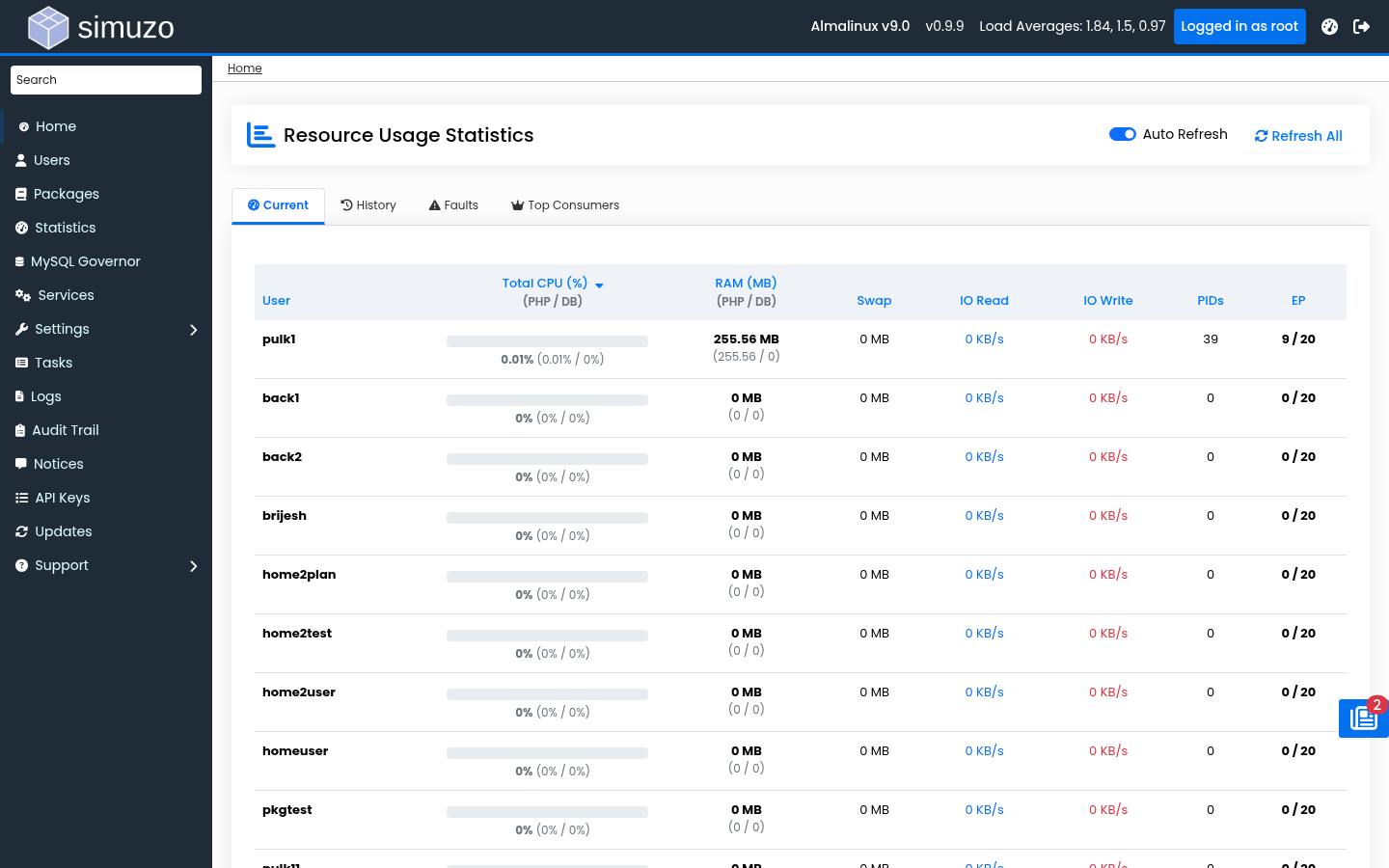
Live CPU, RAM, IO, PIDs, and EP across users—including DB-attributed metrics when governor is active.
Stop noisy neighbors with package-based CPU, memory, IO, and process controls powered by Linux cGroups v2.
Create reusable limit packages for shared, reseller, and premium tiers. Apply defaults globally, map to panel plans, or override individual accounts when needed.
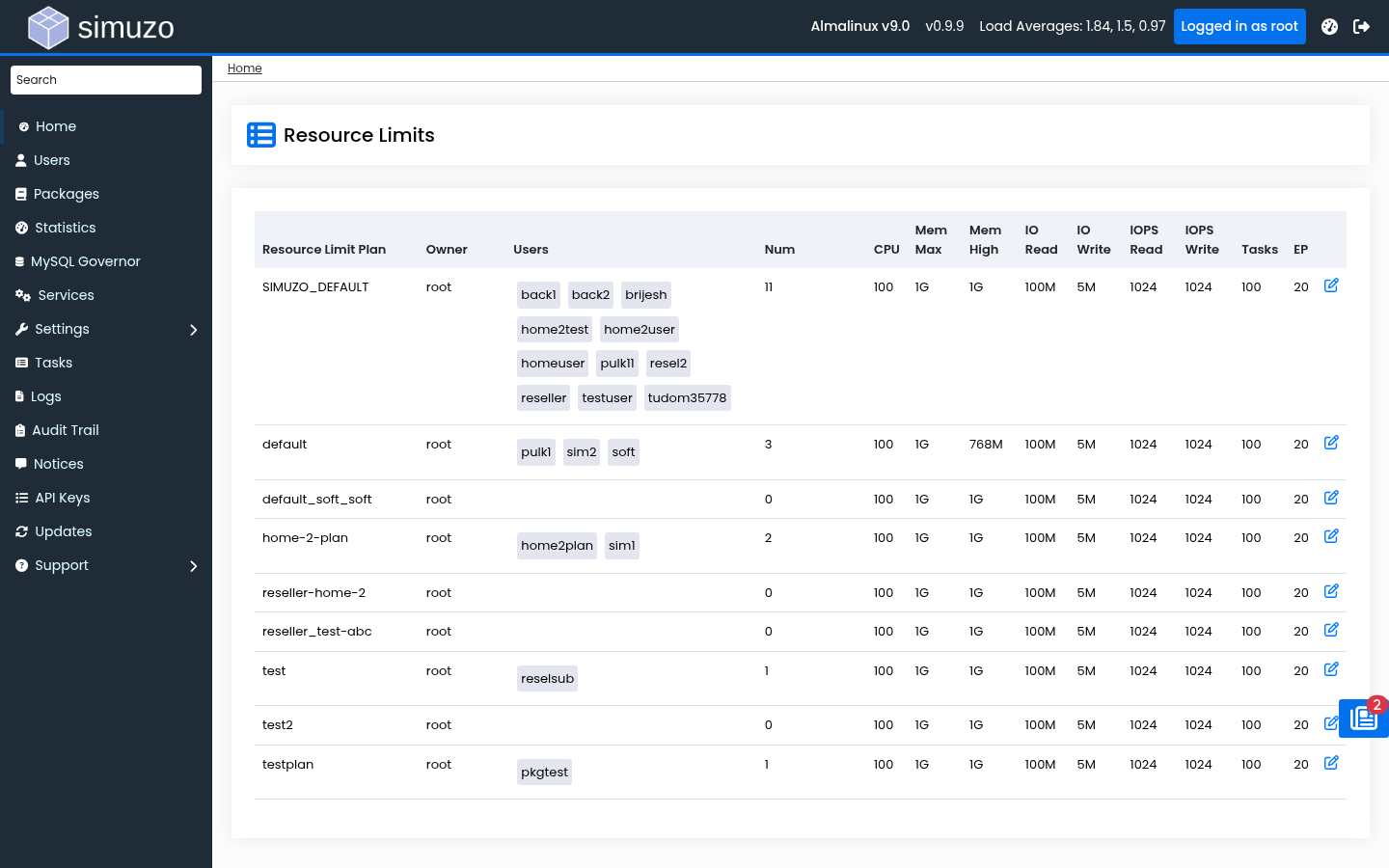
Limits without observability create guesswork. Simuzo pairs packages with live and historical metrics.
Live CPU, RAM, IO, PIDs, and EP across users—including DB-attributed metrics when governor is active.
Configurable collection interval and retention for capacity trends and plan design.
See who hits limits and who drives load so you can upgrade plans or investigate abuse.
simuzo-procmon helps keep user processes in the correct cgroup hierarchy so limits apply to web, cron, and other workloads consistently.
Simuzo uses Linux cGroups v2 controllers for CPU, memory, IO (bandwidth and IOPS), and PIDs, plus entry-process tracking for concurrent connection style limits.
Yes. Define packages (including a default) and map them to panel plans or set custom per-user overrides that take priority.
Use Statistics for live usage, historical trends, fault records, and top consumers—then adjust packages or investigate noisy accounts.
Install Simuzo on your panel server, enable isolation and limits, and give users a safer multi-tenant environment.